Table of Contents
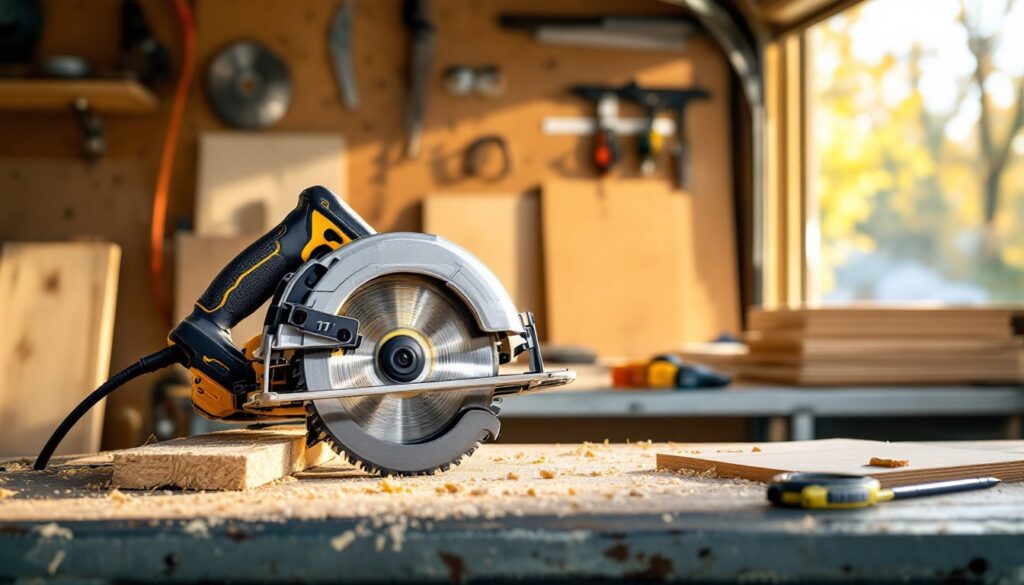
ToggleWalk into any job site or serious DIYer’s garage and you’ll spot a 7 1/4 circular saw within arm’s reach. It’s not coincidence, this tool has earned its place as the workhorse of cutting tasks. Whether breaking down sheet goods, ripping framing lumber, or trimming deck boards, the 7 1/4-inch blade diameter hits the sweet spot between power, portability, and cutting depth. This guide covers what sets this size apart, what to look for when buying, and how to use it safely across common home projects.
Key Takeaways
- A 7 1/4 circular saw is the industry standard workhorse that cuts 2x4s at 45 degrees in one pass and achieves 2-5/8 inches of cutting depth at 90 degrees, balancing power, portability, and performance.
- When buying a 7 1/4 circular saw, prioritize corded 15-amp motors (5,200–5,800 RPM), brushless cordless options with 5.0Ah batteries, electric blade brakes, and easy tool-free blade changes.
- Use the right blade for your material: 24-tooth carbide for framing, 60–80 tooth blades for finish work, PCD blades for fiber cement, and composite-specific blades for treated deck lumber.
- Prevent kickback by supporting both sides of the cut line, setting blade depth to 1/4 inch below material, maintaining a stable stance with both hands, and staying to the side of the cut—never directly behind the saw.
- Master common applications like framing, deck building, plywood breakdown, and exterior trim by using straightedge guides for rips, scoring cut lines on plywood, and observing code limits when notching studs.
- Always wear ANSI Z87.1 safety glasses, hearing protection, and appropriate respirators when cutting treated lumber or fiber cement, unplug or remove batteries during maintenance, and keep the blade guard free and functional.
What Makes the 7 1/4 Circular Saw the Gold Standard
The 7 1/4-inch blade diameter became the industry standard for good reason: it cuts through a 2×4 at 45 degrees in one pass, handles 2-5/8 inches of cutting depth at 90 degrees, and balances weight with motor power better than smaller or larger alternatives.
Compared to the 6 1/2-inch saws, the 7 1/4-inch delivers deeper cuts without needing flip-and-finish techniques for dimensional lumber. It slices through actual 1-1/2 inch thick material (nominal 2-inch lumber) at a bevel with room to spare. Larger 8 1/4-inch or 10-inch worm-drive models offer more depth but add weight and bulk that slow down overhead cuts or prolonged use.
Most corded models in this size run 15-amp motors, delivering around 5,000 to 5,800 RPM under load, enough torque to power through pressure-treated 4x4s or hardwood without bogging down. Cordless versions on 18V or 20V Max platforms now rival corded performance for typical residential cuts, though battery runtime becomes the limiting factor on big framing jobs.
Blade availability is another advantage. The 7 1/4-inch format dominates retail and online inventory, so you’ll find specialty blades, ultra-thin kerf, dado stacks (table saw only), fiber cement, metal-cutting, or fine-finish, in stock at every home center. Arbor size is standardized at 5/8 inch across nearly all models, ensuring universal blade compatibility.
This size also pairs well with job-site conditions. It’s light enough (8 to 10 pounds for corded, 9 to 11 pounds for cordless with battery) to carry up a ladder or maneuver overhead for roof sheathing cuts, yet stable enough for accurate rip cuts when guided by a straightedge clamp.
Key Features to Look for When Buying a 7 1/4 Circular Saw
Motor Power and Performance
Corded models should hit the full 15-amp mark for professional-grade performance. Lower-amperage saws (10–12 amps) struggle in dense material and generate more heat under sustained cuts. Check the no-load RPM spec, most quality saws spin between 5,200 and 5,800 RPM, which translates to cleaner cuts and less kickback risk.
Cordless saws depend on battery voltage and amp-hour capacity. An 18V or 20V Max battery at 5.0Ah or higher will power through about 300 linear feet of 2x4s per charge under normal conditions. Brushless motors extend runtime by 25–50% compared to brushed designs and reduce maintenance since there are no carbon brushes to replace. If the saw will see heavy use, deck framing, subflooring, or production cutting, buy into a battery platform you already own or plan to expand, since proprietary batteries lock you into one brand’s ecosystem.
Look for electric brakes that stop the blade within two seconds of releasing the trigger. This safety feature is now standard on most mid-tier and pro models but sometimes omitted on budget units. It prevents coasting blades from contacting material or the user after a cut and makes blade changes safer.
Blade Quality and Compatibility
The saw ships with a general-purpose 24-tooth carbide blade, suitable for framing lumber and rough cuts. For finish carpentry or plywood, swap in a 60-tooth or 80-tooth fine-finish blade to minimize tear-out. The higher tooth count produces slower feed rates, so don’t force the cut or you’ll overheat the motor.
Blade changing should be tool-free or require only the included spindle wrench. Some models feature a spindle lock button that immobilizes the arbor: press it, loosen the arbor bolt counterclockwise (left-hand thread on some brands, so verify), remove the old blade, and install the new one with teeth pointing forward in the direction of rotation. Detailed steps can be found in changing a circular saw blade procedures that walk through the process safely.
Check the maximum blade thickness (kerf) the saw accepts. Thin-kerf blades (0.059 to 0.063 inches) reduce motor load and battery drain, helpful on underpowered cordless units. Full-kerf blades (0.090 to 0.125 inches) cut straighter in dense hardwoods but demand more torque.
Bevel capacity is typically 0 to 50 or 56 degrees. A 56-degree max bevel is useful for compound miter work or roof framing. The bevel lock should tighten without tools and include positive stops at 22.5 and 45 degrees for quick, repeatable angle cuts. Sloppy bevel mechanisms lead to drift mid-cut and inaccurate joinery.
Top Uses for Your 7 1/4 Circular Saw Around the Home
Framing and rough carpentry: Ripping studs, cutting joists, and trimming sheathing or subflooring. The saw handles pressure-treated lumber and engineered I-joists without issue. For long rip cuts, clamp a straightedge guide (a factory edge of plywood or a commercial track) parallel to the cut line, offset by the distance from blade to the edge of the saw’s base plate. This setup rivals a table saw for sheet goods breakdown in tight spaces.
Deck building: Crosscutting deck boards, notching joists, and trimming railings. Composite decking dulls standard carbide blades faster than wood, so use a composite-specific blade with triple-chip or high-ATB tooth geometry. Cutting wet or green pressure-treated lumber generates more friction, reduce feed speed and clear sawdust frequently to prevent binding.
Exterior trim and siding: Cutting fiber cement siding, vinyl siding, or engineered trim. Fiber cement requires a polycrystalline diamond (PCD) blade or carbide blade rated for abrasive materials: standard wood blades dull in minutes. Always cut outdoors with dust collection or wet-cutting to control silica dust, and wear a NIOSH-approved N95 or P100 respirator. Vinyl siding cuts cleanly with a fine-tooth plywood blade installed backward (teeth facing the opposite direction) to prevent chipping.
Plywood and OSB breakdown: Breaking down full sheets (48 x 96 inches) into manageable sections before final sizing on a table saw. Support both sides of the cut line with sawhorses or a rigid foam panel to prevent binding or drop-off kickback. For cleaner cuts, score the cut line with a utility knife to sever surface fibers, then cut with the good face down (blade exits the top, minimizing visible tear-out).
Dimensional lumber cutting: Crosscuts, miter cuts, and bevel cuts on 2x lumber. For repetitive cuts to the same length, clamp a stop block to your work surface. When cutting treated lumber or hardwoods, let the saw reach full RPM before engaging the material, forcing a slow blade generates heat and increases kickback risk.
Renovation and demolition: Cutting through old flooring, trimming door jambs for new flooring installation, or notching studs for plumbing or electrical (observing the International Residential Code limits: notches in bearing walls can’t exceed 25% of stud depth, and holes must be centered and no larger than 40% of stud depth). For in-place cuts like flush-trimming a door jamb, set depth to slightly more than the material thickness to avoid hitting the subfloor. Projects and techniques for various woodworking and renovation tasks often leverage this saw for efficiency and precision.
Essential Safety Tips and Best Practices
Always wear proper PPE: Safety glasses or goggles (ANSI Z87.1 rated), hearing protection (circular saws reach 95–105 dB under load), and a dust mask or respirator when cutting treated lumber, MDF, or fiber cement. Gloves improve grip but can catch on moving parts, use them for material handling, not during cuts.
Check the blade before every use: Inspect for cracked carbide teeth, bent bodies, or pitch buildup. A damaged blade can shatter at high RPM. Clean resin and pitch with a dedicated blade cleaner or warm soapy water and a stiff brush. Ensure the blade is installed in the correct rotation direction, the teeth should point forward at the bottom of the blade where it contacts the material.
Set the correct cutting depth: The blade should extend 1/4 inch below the material being cut. Deeper settings increase kickback risk and expose more blade, while shallow settings force the motor to work harder and can cause binding. Adjust depth on a scrap piece before starting the actual cut.
Support your workpiece properly: The cut-off side and the keeper side both need support within 12 inches of the cut line to prevent binding or drop-off. Use sawhorses, a workbench, or rigid foam panels. Never hold small cutoffs by hand near the blade, clamp them or use a larger piece that gives your hands clearance.
Understand kickback and how to prevent it: Kickback occurs when the blade binds in the cut and the saw is violently thrown backward toward the operator. Causes include pinched blades (from unsupported material sagging), dull blades, cutting wet or warped lumber, or forcing the saw through the cut. Always keep your body to the side of the cut line, never directly behind the saw. If the blade binds, release the trigger immediately and let the blade stop before extracting the saw.
Use both hands and maintain a stable stance: Grip the main handle with your dominant hand and the front auxiliary handle with the other. Stand with feet shoulder-width apart, never off-balance or reaching. Let the saw’s weight and sharp blade do the work, forcing it generates heat, dulls the blade, and increases kickback risk.
Unplug or remove the battery during blade changes or adjustments: Accidental trigger engagement has caused countless injuries during maintenance. On corded models, unplug from the outlet: on cordless, remove the battery pack entirely.
Observe electrical safety for corded models: Use a 14-gauge or heavier extension cord for 15-amp saws up to 50 feet, or 12-gauge for runs up to 100 feet. Undersized cords cause voltage drop, reduce motor power, and generate heat that can damage the tool or start a fire. Plug into a GFCI-protected outlet when working outdoors or in damp conditions.
Keep the lower blade guard free and functioning: The spring-loaded guard should retract smoothly as you start the cut and snap back immediately when the saw clears the material. Never wedge it open or disable it, this guard is your primary protection from blade contact. Clean sawdust buildup from the guard mechanism regularly.
Plan your cut path: Ensure the power cord or hose (for dust collection) won’t cross the cut line or snag mid-cut. Position the cord over your shoulder or to the side. For bevel cuts, the motor housing tilts and changes the saw’s balance, practice on scrap to get a feel before cutting finish material.
Many experienced DIYers and contractors share insights and safety reminders on platforms like Popular Mechanics, reinforcing best practices for tool handling and project execution.
Conclusion
A quality 7 1/4 circular saw earns its keep on nearly every home project, from framing a shed to trimming a single door casing. Choose a model that matches your power source preference and workload, keep blades sharp and appropriate for the material, and respect the safety protocols. Master the fundamentals of depth setting, support, and feed rate, and this tool will deliver clean, accurate cuts for decades.