Table of Contents
ToggleShopping for a refrigerator means committing to a decade-plus relationship with a major appliance, one that runs 24/7 and stores everything from your kid’s science project to next week’s meal prep. Whirlpool’s been building fridges for American kitchens since 1948, and their current lineup offers something for every layout and budget. Whether you’re replacing a dying unit on a tight timeline or planning a full kitchen remodel, understanding which Whirlpool model fits your space, cooking habits, and must-have features saves you from buyer’s remorse and service calls.
Key Takeaways
- The best Whirlpool refrigerator depends on your kitchen layout: French door models maximize capacity, side-by-side units fit tight spaces, and top-freezer models offer the most energy efficiency at the lowest cost.
- Whirlpool refrigerators balance affordability with reliability, featuring extensive repair networks, widely available parts, and ENERGY STAR certification that saves approximately $30-50 annually in electricity costs.
- Adaptive defrost systems and humidity-controlled crisper drawers are key features that reduce energy waste and extend produce life by 3-5 days compared to basic models.
- Measure your space three times (accounting for basements, outlets, and door swing clearance), verify electrical requirements, and plan your delivery route before purchasing a Whirlpool refrigerator to avoid costly installation delays.
- Counter depth (24-27 inches) provides a flush, built-in appearance but sacrifices storage capacity, while standard depth (30-36 inches) maximizes usable volume at the cost of protruding past your cabinets.
- Through-door ice and water dispensers add convenience and expense ($150-300 premium) but introduce two additional mechanical failure points—weigh this against simpler alternatives like filtered pitchers before committing to the feature.
Why Choose a Whirlpool Refrigerator for Your Home?
Whirlpool occupies the middle ground between budget builders and luxury brands, solid construction without the boutique price tag. Their warranty coverage typically includes one year parts and labor, with extended warranties available through most retailers.
The brand’s repair network is extensive across North America. Parts availability matters when you’re three days into a compressor failure, and Whirlpool components ship to most service providers within 48 hours. Independent appliance techs consistently rate Whirlpool among the easier brands to diagnose and repair, which translates to lower service costs over the appliance’s lifespan.
Energy efficiency has improved significantly in recent models. Most 2026 Whirlpool refrigerators carry ENERGY STAR certification, meeting EPA guidelines that save roughly 9% more energy than federal minimum standards. That’s approximately $30-50 annually in reduced electricity costs, modest but meaningful over 12-15 years of operation. The real value lies in standardized dimensions that fit existing cabinet cutouts without requiring carpentry work during replacement.
Top Whirlpool Refrigerator Models for 2026
Best French Door Whirlpool Refrigerator
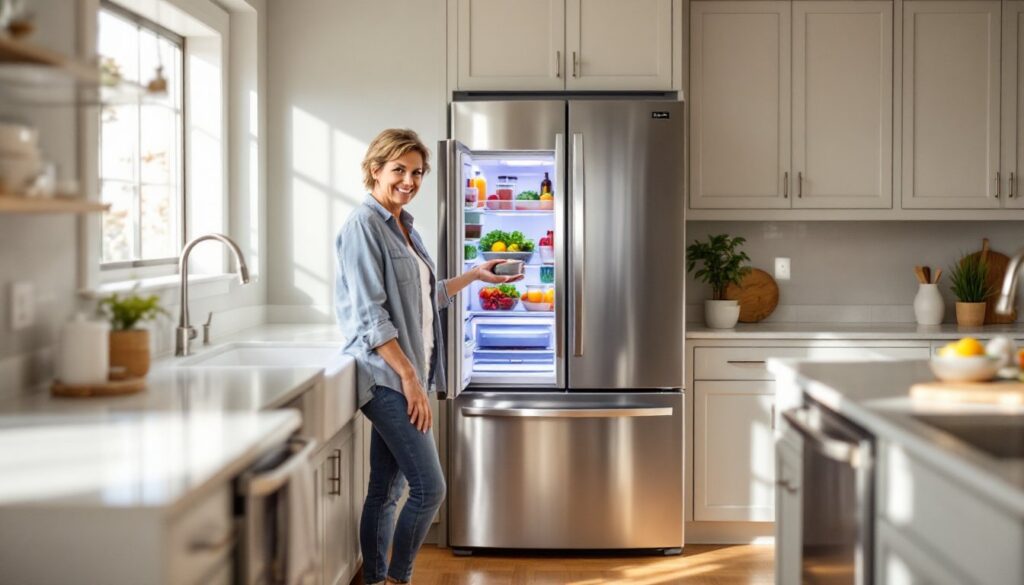
The Whirlpool WRF535SWHZ (36-inch width, 25 cubic feet) balances capacity with features most families actually use. The bottom freezer drawer includes adjustable dividers, critical for organizing frozen items without the grocery bag avalanche.
Its adaptive defrost system monitors compressor run time and only defrosts when necessary, reducing frost buildup without wasting energy. The interior LED lighting uses tower-style fixtures on both side walls instead of a single ceiling strip, eliminating the shadow zones that hide expired yogurt in the back corners.
Crisper drawers include humidity controls, slide them toward the fruit icon for low humidity (gases escape), or toward vegetables for high humidity (moisture retention). The ice maker sits in the left fresh food door, freeing up freezer space but adding about 2 inches to the door swing radius. Measure your clearance if adjacent walls or islands are close.
Consider the extended depth (roughly 36 inches without handles). Standard counter depth runs 24-25 inches, so this model will protrude 6-8 inches past typical base cabinets. That’s fine for galley kitchens but creates a bottleneck in narrow spaces.
Best Side-by-Side Whirlpool Refrigerator
The Whirlpool WRS325SDHZ (33-inch width, 25 cubic feet) fits tighter kitchens where French door swing clearance is a problem. Side-by-side doors only need about 18 inches of swing space versus 24-28 inches for full-width doors.
Freezer access at eye level suits households that rely heavily on frozen meals and bulk buying. The narrow door bins work well for condiments but won’t fit a gallon milk jug horizontally, plan to store larger containers on interior shelves.
This model includes Accu-Chill temperature management, which uses sensors in both compartments to adapt cooling based on current load and usage patterns. When you load 40 pounds of groceries after a Costco run, it ramps up compressor cycles to restore target temperature faster.
The external ice and water dispenser adds convenience but requires a 1/4-inch water supply line connection. If your current fridge doesn’t have this, you’ll need to tap into the nearest cold water pipe, usually under the sink. That’s a straightforward compression fitting job for most DIYers with basic plumbing tools.
Best Top-Freezer Whirlpool Refrigerator
The Whirlpool WRT318FZDM (30-inch width, 18 cubic feet) strips away digital controls and through-door dispensers for reliable cooling at the lowest price point in the lineup. Top-freezer models remain the most energy-efficient configuration, cold air naturally falls into the fresh food section without fighting thermodynamics.
This is the workhorse for garages, basements, or rental properties where simplicity beats features. Mechanical thermostats are easier to troubleshoot than digital boards. Fewer moving parts means fewer service calls. Many appliance testing labs confirm that basic top-freezer units outlast complex models by 2-4 years on average.
The adjustable wire shelving slides out for cleaning but lacks the spill-proof glass shelves found in pricier models. Budget for shelf liners if you’re storing uncovered leftovers. Lighting is basic, single incandescent bulb in the fresh food section. LED retrofits are available but void warranties if they cause electrical issues.
Installation clearance is minimal. The hinges are standard residential spec, requiring only 1 inch clearance on the hinge side. That makes it viable for alcoves and tight laundry room corners where other styles won’t fit.
Key Features to Look for in a Whirlpool Refrigerator
Adaptive defrost beats timed defrost in energy efficiency and frost prevention. Older systems defrost on a fixed schedule regardless of need. Adaptive systems monitor compressor activity and only initiate defrost cycles when frost accumulation is likely, usually after 6-10 hours of cumulative run time.
Spill-proof shelving uses tempered glass with raised edges that contain liquid spills to one shelf instead of dripping through wire racks onto everything below. This matters more than it sounds, one broken jar of pasta sauce can ruin a week’s worth of groceries on lower shelves.
Humidity-controlled crispers extend produce life by 3-5 days compared to standard drawers. The slider mechanism adjusts vent opening size. Low humidity (vents open) suits fruits that emit ethylene gas, apples, pears, stone fruits. High humidity (vents closed) keeps leafy greens from wilting. Many kitchen organization guides emphasize proper crisper settings as the easiest way to reduce food waste.
Ice maker location affects usable space. Door-mounted units sacrifice fresh food storage but preserve full freezer volume. Freezer-mounted makers take up drawer space but keep door bins available for tall bottles.
Temperature alarms notify you when the door’s been open too long or internal temperature rises outside safe zones (above 40°F in fresh food, above 0°F in freezer). Digital models typically include audible alerts: basic models rely on visual indicators.
Consider ADA-compliant controls if household members have mobility limitations. Controls mounted below 48 inches and lever-style handles meet accessibility standards under the Americans with Disabilities Act, not required for residential installs but worth considering for aging-in-place planning.
How to Choose the Right Whirlpool Refrigerator for Your Kitchen
Measure the space three times: width, depth, and height. Subtract 1 inch from width and height for ventilation and door clearance. Depth measurement should account for baseboard trim and protruding electrical outlets. Many installations fail because the outlet box adds 1.5 inches that wasn’t factored into depth calculations.
Door swing clearance requires actual measurement with the floor plan. Open a door 90 degrees and measure from the hinge side to the door’s fully open position. Compare that to your walkway width, adjacent cabinet faces, and countertop overhangs. French doors need less individual swing space but require clearance for both doors simultaneously when loading groceries.
Electrical requirements are standardized, most residential refrigerators run on 120V, 15-amp dedicated circuits. Code requires a dedicated circuit (no other appliances sharing the breaker) and a grounded three-prong outlet. If your current setup uses a two-prong outlet, hire an electrician to install proper grounding before delivery. Running a refrigerator on an ungrounded circuit voids most warranties.
Counter depth versus standard depth affects aesthetics and capacity. Counter depth units (24-27 inches deep) sit flush with cabinets for a built-in look but sacrifice 3-5 cubic feet of storage. Standard depth (30-36 inches) protrudes past counters but maximizes volume. Calculate 1.5 cubic feet per household member as a baseline, so a four-person household needs roughly 20-22 cubic feet minimum.
Delivery logistics matter more than expected. Measure doorways, hallways, and stairwells along the delivery path. Standard residential doorways are 32-36 inches wide: refrigerators ship at 33-36 inches. Removing doors (both appliance and house doors) is common but adds time. Delivery teams typically charge extra for complex installations involving stairs, tight corners, or external hoisting.
Check local building codes if you’re replacing a built-in model. Some jurisdictions require GFCI-protected outlets for appliances in kitchens, though this wasn’t standard for refrigerators until recent code cycles. Home improvement resources like Better Homes & Gardens often provide regional code summaries, but always verify with your local building department before finalizing electrical work.
Finish selection affects maintenance. Stainless steel shows fingerprints but resists rust and matches commercial-style ranges. Black or white finishes hide smudges better but can yellow near heat sources over time. Fingerprint-resistant stainless (available on most mid-range models) uses a clear coating that actually works, daily wipe-downs aren’t necessary unless you have toddlers.
Consider whether you need ice and water through the door. It’s convenient but adds $150-300 to the purchase price, requires plumbing work, and creates two more potential failure points (water valve and dispenser mechanism). Households that use filtered pitchers or under-sink systems may not need the built-in option.