Table of Contents
ToggleHealth Savings Accounts (HSAs) and Flexible Spending Accounts (FSAs) aren’t just for doctor visits and prescriptions. If someone in the household deals with asthma, severe allergies, or chronic respiratory conditions, an air purifier might qualify as an HSA-eligible medical expense, potentially saving hundreds of dollars. The catch? Not every unit qualifies, and the IRS doesn’t publish a simple yes-or-no list. This guide walks through exactly what makes an air purifier HSA-eligible, how to navigate the purchase and reimbursement process, and which medical conditions strengthen the case for approval.
Key Takeaways
- An air purifier HSA eligible purchase requires medical necessity documented by a healthcare provider through a Letter of Medical Necessity rather than automatic pre-approval.
- Respiratory conditions like asthma, allergic rhinitis, and COPD have the strongest track record for HSA air purifier approval when backed by specific ICD-10 diagnosis codes.
- Only true HEPA filters rated to capture 99.97% of particles qualify; HEPA-type alternatives don’t meet the medical standard required for HSA claims.
- Submitting complete documentation upfront—including the LMN, itemized receipt with model number, and diagnosis code—prevents denials and accelerates reimbursement by weeks.
- HSA funds can save 20–40% on air purifier costs depending on your tax bracket, while maintaining budget awareness for ongoing filter replacements ($50–$150 annually).
What Makes an Air Purifier HSA or FSA Eligible?
The IRS allows HSA and FSA funds for medical expenses that diagnose, cure, mitigate, treat, or prevent disease. Air purifiers fall into a gray zone because they’re dual-purpose devices, they improve general indoor air quality for anyone, but they also serve as medical equipment for people with documented respiratory conditions.
The key factor is medical necessity. An air purifier becomes HSA-eligible when a licensed healthcare provider determines it’s medically necessary to treat or manage a specific condition. Without that medical connection, the IRS classifies it as a general health or wellness product, which doesn’t qualify.
Most HSA and FSA administrators don’t pre-approve air purifiers the way they do blood pressure monitors or diabetic supplies. That means the burden of proof falls on the account holder. A Letter of Medical Necessity (LMN) from a physician, allergist, or pulmonologist is the linchpin document. It should include the patient’s diagnosis, how an air purifier addresses the condition, and ideally a recommendation for a HEPA-filtered model (High-Efficiency Particulate Air filter rated to capture 99.97% of particles 0.3 microns or larger).
Some FSA administrators are more lenient and may accept air purifiers with a simple receipt if the account holder has a history of respiratory claims. HSA administrators typically require the LMN upfront or upon audit. Always check with the specific plan administrator before assuming eligibility, policies vary widely between providers.
How to Purchase an Air Purifier with Your HSA or FSA Funds
Buying an air purifier with HSA or FSA funds isn’t as simple as swiping the card at checkout. Here’s the step-by-step process that minimizes headaches and rejected claims.
Step 1: Schedule an appointment with a healthcare provider who treats the respiratory condition. Be specific about symptoms, frequency of asthma attacks, allergy flare-ups tied to indoor air quality, sleep disruption from congestion, or physician-documented sensitivities to mold, pet dander, or volatile organic compounds (VOCs).
Step 2: Request a Letter of Medical Necessity. The provider should write on letterhead and include their National Provider Identifier (NPI), the patient’s name and date of birth, the diagnosis code (ICD-10), a statement that the air purifier is medically necessary, and any specifications (e.g., “HEPA filtration recommended for particle removal”).
Step 3: Confirm eligibility with the HSA or FSA administrator before purchasing. Some allow direct card payment if the merchant accepts HSA/FSA cards: others require out-of-pocket payment followed by reimbursement submission. Knowing the process upfront prevents cash flow issues.
Step 4: Purchase the air purifier. Keep the itemized receipt showing the device name, model number, price, date, and merchant. If buying online, download and save the order confirmation and receipt as PDFs.
Step 5: Submit the claim (if required). Attach the LMN, receipt, and any claim form the administrator provides. Digital submissions via administrator portals tend to process faster than mailed paperwork.
Getting a Letter of Medical Necessity
Not all providers are familiar with writing LMNs for air purifiers, so it helps to bring a template or sample. The letter doesn’t need to be lengthy, one page is sufficient, but it must establish causation between the medical condition and the need for improved air filtration.
Key elements:
- Patient information: Full name, date of birth, and account holder relationship (if purchasing for a dependent).
- Diagnosis: Use the formal ICD-10 code. For example, J45.909 (unspecified asthma, uncomplicated) or J30.1 (allergic rhinitis due to pollen).
- Medical necessity statement: “Due to [patient]’s diagnosis of [condition], a HEPA air purifier is medically necessary to reduce exposure to airborne allergens and improve respiratory function.”
- Duration: Some administrators ask if the need is temporary or ongoing. Chronic conditions strengthen the case.
- Provider credentials: Signature, printed name, NPI, license number, and contact information.
Some physicians charge a nominal fee (typically $10–$25) for writing an LMN, which itself isn’t HSA-eligible. Factor that into the budget.
Best HSA-Eligible Air Purifiers for Home Use
Not all air purifiers are created equal, and when using HSA or FSA funds, the goal is medical-grade filtration, not just odor masking. Here’s what to prioritize.
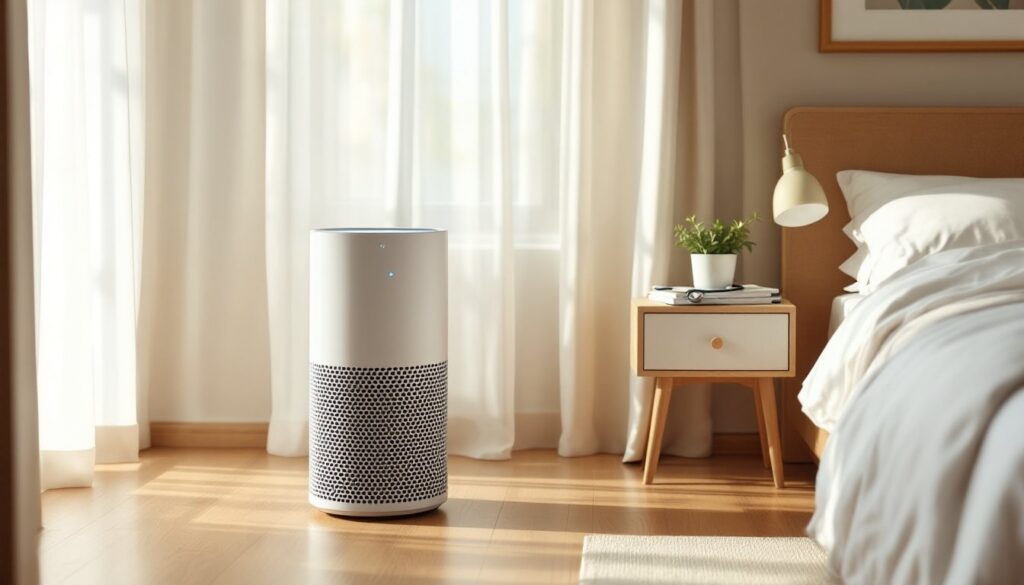
HEPA filtration is non-negotiable. True HEPA filters remove 99.97% of particles down to 0.3 microns, including pollen, mold spores, pet dander, and dust mite debris. HEPA-type or HEPA-like filters don’t meet the same standard and may not satisfy an LMN requirement.
Room size matching matters. Air purifiers list a Clean Air Delivery Rate (CADR) measured in cubic feet per minute (CFM). For a bedroom measuring 12′ × 12′ with 8′ ceilings (1,152 cubic feet), look for a CADR of at least 115 CFM for effective air turnover. Undersized units run continuously without meaningful results.
Activated carbon filters complement HEPA by adsorbing VOCs, smoke, and chemical odors. If the medical need includes sensitivity to household cleaners, paint fumes, or cooking smoke, dual-filtration (HEPA + carbon) is worth the cost.
Some models tested by cleaning experts for performance include units with multiple fan speeds, filter change indicators, and Energy Star certification to keep operating costs low. Products from manufacturers focused on allergen removal often appear in clinical studies and may strengthen documentation for HSA claims.
Avoid ionizers and ozone generators unless specifically prescribed. Some produce trace ozone, which can irritate airways, the opposite of the intended medical benefit. Stick with mechanical filtration.
Budget for replacement filters when calculating total cost. HEPA filters typically last 6–12 months depending on use: activated carbon filters may need changing every 3–6 months. Factor $50–$150 annually for filter replacements per unit.
Medical Conditions That Qualify for HSA Air Purifier Purchases
The stronger the documented medical need, the smoother the HSA or FSA claim process. These conditions have the best track record for air purifier approval.
Asthma (any subtype): Whether allergic, exercise-induced, or occupational, asthma diagnosis is one of the most straightforward qualifiers. Airborne triggers like dust, pollen, and pet dander are well-documented asthma exacerbators, and HEPA filtration directly addresses them.
Allergic rhinitis (hay fever): Seasonal or perennial allergies caused by pollen, mold, or dander respond well to indoor air purification. An allergist’s confirmation of specific sensitivities (via skin or blood testing) strengthens the case.
Chronic obstructive pulmonary disease (COPD): Patients with emphysema or chronic bronchitis benefit from reduced particulate exposure. A pulmonologist’s LMN noting that air quality improvements support disease management is typically sufficient.
Multiple chemical sensitivity (MCS) or environmental illness: This diagnosis is more controversial, but if documented by a physician and tied to VOC or particulate exposure, it can qualify. The LMN should reference specific triggers and how air purification mitigates symptoms.
Immune system disorders: Conditions like common variable immunodeficiency (CVID) or those undergoing chemotherapy may require reduced pathogen and particulate exposure. An immunologist or oncologist can provide the necessary documentation.
Sleep apnea or snoring exacerbated by allergens: If a sleep study or ENT evaluation ties airway inflammation to allergen exposure, some plans have approved air purifiers for bedroom use.
General wellness claims, “cleaner air for the family” or “removing cooking odors”, don’t cut it. The condition must be diagnosed, and the air purifier must be part of the treatment plan.
Documentation and Reimbursement Tips for HSA Air Purifier Claims
Even with a solid LMN, claims can be denied due to missing paperwork or vague descriptions. Here’s how to bulletproof the submission.
Itemize everything. The receipt must show the device name, not just “home goods” or “electronics.” If purchasing from a big-box retailer or online, ensure the invoice lists “air purifier” and the model number. Generic descriptions trigger automatic denials.
Submit the LMN with the initial claim, not after a denial. Some administrators accept retroactive documentation, but it delays reimbursement by weeks or months. Front-loading the paperwork speeds approval.
Separate eligible and non-eligible purchases. If buying an air purifier alongside non-medical items (furniture, décor), use a separate transaction or clearly highlight the eligible item on a combined receipt. Administrators won’t parse through a $500 invoice to find the $200 air purifier.
Keep digital and physical copies. Scan the LMN, receipt, and any correspondence. Store them for at least three years, the IRS can audit HSA expenditures within that window, and the burden of proof is on the account holder.
If denied, appeal with clarification. Common denial reasons include “not medically necessary” or “general wellness item.” Resubmit with a more detailed LMN or a letter from the provider emphasizing the device’s role in managing the specific condition. Some account holders succeed on appeal by citing IRS Publication 502, which allows medical expenses that treat or mitigate disease.
Tax implications: HSA funds used for non-qualified expenses are subject to income tax plus a 20% penalty (10% if over age 65). FSA funds are use-it-or-lose-it, so verify eligibility before the plan year ends to avoid forfeiting money.
For tech-enabled households, some connected devices and smart home systems now include air quality sensors that log particulate levels over time. While the data isn’t required for HSA claims, it can support documentation by showing measurable improvements in indoor air quality post-installation.
Conclusion
Air purifiers can be HSA or FSA eligible, but approval hinges on medical necessity documented by a healthcare provider. With the right diagnosis, a solid Letter of Medical Necessity, and attention to paperwork details, homeowners can use pre-tax dollars to address respiratory health, saving 20–40% depending on tax bracket. The process requires more legwork than buying a typical HSA-approved item, but for households managing chronic respiratory conditions, the investment in cleaner indoor air pays off in symptom relief and long-term health.