Table of Contents
ToggleIf you’ve been researching dishwashers and stumbled across “ABT” in your search, you might be wondering whether it’s a brand, a model designation, or something else entirely. Here’s the reality: ABT isn’t a dishwasher manufacturer. ABT Electronics is one of the largest independent appliance retailers in the United States, based in Glenview, Illinois. They sell dishwashers from major brands like Bosch, KitchenAid, Miele, and Samsung, but they don’t manufacture their own units. This guide clears up the confusion and helps readers understand what they’re actually looking for when they search “ABT dishwasher,” plus offers practical buying and installation advice for whichever brand they choose.
Key Takeaways
- ABT is a major appliance retailer, not a dishwasher manufacturer—they sell units from brands like Bosch, KitchenAid, and Miele with white-glove delivery and in-house installation services.
- An ABT dishwasher typically features Energy Star certification with water usage under 3.5 gallons per cycle, and noise levels range from 38–54 decibels depending on model tier.
- Built-in dishwashers require professional installation or careful DIY work involving water supply, drain, and electrical connections; ABT charges $150–$250 for installation to prevent costly mistakes.
- Popular ABT models include the Bosch 800 Series ($1,100–$1,300) for quiet operation, KitchenAid KDTM404K ($900) for flexible loading, and premium Miele G 7000 ($1,800–$2,400) with advanced drying.
- ABT’s showroom advantage allows side-by-side model comparison and expert guidance on rack configurations and performance, which online shopping cannot replicate.
- Routine maintenance requires monthly filter cleaning and periodic runs with dishwasher cleaner; common issues like poor drainage or leaks are preventable with proper installation and basic troubleshooting.
What Makes ABT Dishwashers Stand Out in Today’s Market
ABT Electronics has built a reputation as a trusted retailer rather than a manufacturer. When shoppers search for an “ABT dishwasher,” they’re typically looking at units sold through ABT’s extensive inventory, which includes over 40 brands and hundreds of models.
What sets ABT apart is their white-glove delivery service, expert installation teams, and local service network. Unlike big-box retailers, ABT employs its own technicians who handle installation, haul-away, and warranty work. For a built-in dishwasher install, which requires hooking up supply lines, drain hoses, and sometimes hardwiring, this matters.
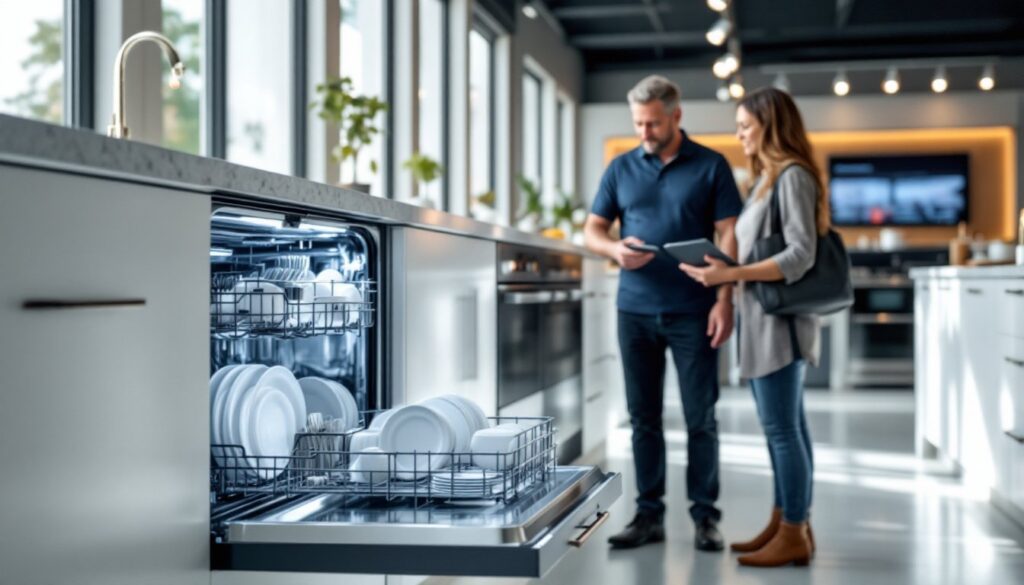
ABT also stocks both budget-friendly models (under $500) and high-end European units that exceed $2,000. Their showroom lets buyers compare noise levels, rack configurations, and control interfaces side-by-side, which is tougher to do online. If you’re upgrading from a 15-year-old unit, seeing how a modern third rack handles flatware or how quiet a 42-decibel Bosch runs in person can shift your decision.
The retailer frequently bundles dishwashers with kitchen packages, offering discounts when you buy a range, refrigerator, and dishwasher together. That’s a solid move if you’re doing a full remodel and want matched finishes like stainless steel or panel-ready fronts.
Popular ABT Dishwasher Models and Their Key Features
ABT’s inventory changes with manufacturer lineups, but a few categories consistently perform well. As of 2026, the best dishwashers tested by independent labs share traits like adjustable racks, soil sensors, and efficient wash cycles.
Bosch 800 Series remains a top seller. It runs at 42-44 decibels (quieter than a library), uses a stainless steel tub, and includes a third rack for utensils. The InfoLight projects a red dot on the floor when running, handy since the unit is so quiet you might not realize it’s on. Typical retail price: $1,100–$1,300.
KitchenAid KDTM404K targets homes with heavy cookware. Its ProWash cycle adjusts water temperature and duration based on soil load, and the FreeFlex third rack slides and folds to fit odd-shaped items like measuring cups or small ramekins. Expect to pay around $900.
Miele G 7000 series sits at the premium end. It offers AutoDos detergent dispensing (stores detergent for up to 20 cycles), perfect drying via extra heat, and a knock-to-open feature. Panel-ready models integrate seamlessly with custom cabinetry. Price range: $1,800–$2,400.
For budget builds, the Frigidaire FDSH4501A offers solid performance under $500. It’s louder (around 52 decibels) and lacks a third rack, but it cleans well and fits standard 24-inch cabinet openings.
Built-In vs. Portable ABT Dishwashers
Most dishwashers sold are built-in units that slide under a countertop and connect to dedicated water and drain lines. They require a 24-inch-wide cabinet opening (standard) or an 18-inch space for compact models.
Portable dishwashers roll on casters and hook up to a kitchen faucet via a threaded adapter. They’re ideal for rentals, older homes without dishwasher hookups, or kitchens where installing permanent plumbing isn’t feasible. Portable units typically hold 8–12 place settings versus 14–16 for built-ins.
ABT stocks portables from GE and Danby. If you go this route, check your faucet threading, most standard faucets accept a 3/4-inch aerator adapter, but pull-down or touch faucets may not. You’ll also need floor space to park the unit between uses: most measure about 24 inches wide by 25 inches deep.
Performance and Efficiency: What to Expect from ABT Dishwashers
Modern dishwashers sold through ABT typically carry an Energy Star certification, meaning they use less than 3.5 gallons of water per cycle and around 270 kWh per year. Compare that to hand-washing, which can burn through 27 gallons for the same load.
Wash performance depends on spray arm design, filtration, and cycle options. Mid-range units use a soil sensor that adjusts water temperature and cycle length based on how dirty the dishes are. High-end models add features like zone wash (extra spray for the lower rack) or steam prewash to loosen baked-on food.
Drying performance varies widely. Traditional heated-dry cycles use an element at the tub bottom, which works but can warp plastic items. Bosch and similar brands use condensation drying, hot rinse water evaporates off dishes and condenses on cooler stainless walls. It’s gentler but slower, and plastics may still be damp. Miele and KitchenAid’s premium lines add fan-assisted drying for better results.
Noise levels matter if your dishwasher sits near living spaces. Budget models run at 50–54 decibels (normal conversation volume). Mid-tier units drop to 44–48 decibels. Premium Bosch and Miele models hit 38–42 decibels, which is quieter than rainfall. Insulation, motor mounts, and tub material (stainless vs. plastic) all affect sound.
Cycle times have lengthened. A normal cycle on a modern dishwasher runs 2–3 hours, optimizing for water and energy savings. If you need dishes fast, look for a 1-hour wash or quick cycle, though those use more water and energy.
Installation and Maintenance Tips for ABT Dishwashers
Installing a built-in dishwasher isn’t overly complex, but it touches plumbing, electrical, and cabinetry, so mistakes can flood a kitchen or trip a breaker.
Required connections:
- Water supply line: Typically a 3/8-inch compression fitting taps off the hot water shutoff under the sink. Use a braided stainless supply line, not plastic.
- Drain hose: Connects to the garbage disposal or sink tailpiece. Create a high loop (secure the hose to the underside of the countertop) or install an air gap to prevent backflow. Some local codes require an air gap: check yours.
- Electrical: Most dishwashers need a dedicated 15-amp circuit. You can hardwire or use a plug/receptacle setup if there’s an outlet in the sink cabinet. Follow NEC Article 422 for appliance circuits.
Before you slide the unit in, check that the cabinet opening is level. An unlevel dishwasher won’t drain properly. Adjust the leveling legs (front corners) until a bubble level shows plumb.
Secure the dishwasher to the underside of the countertop using the mounting brackets provided. On stone counters, you may need to use side-mount brackets to the adjacent cabinets instead, drilling into granite or quartz requires a masonry bit and care.
ABT offers installation for a fee (typically $150–$250), which includes hookup, disposal of the old unit, and a quick function test. If you’re swapping a like-for-like model and the connections are already in place, DIY is doable in 1–2 hours. If you’re adding a dishwasher where none existed, hire a plumber and electrician unless you’re comfortable running new lines.
Routine maintenance is minimal. Clean the filter monthly, pull the lower rack, twist the cylindrical filter at the tub bottom, and rinse under hot water. Wipe door seals with a damp cloth to prevent mold. Run an empty cycle with a dishwasher cleaner (citric acid–based or a commercial tablet) every few months to clear mineral buildup.
Common Troubleshooting Issues and Quick Fixes
Dishwashers are fairly reliable, but a few issues crop up regularly.
Won’t drain: Check the filter and drain hose for clogs. If the garbage disposal is new, make sure the knockout plug inside the disposal inlet was removed, a common rookie mistake that blocks drainage.
Poor cleaning: Confirm you’re loading correctly, plates face the center, bowls angled down. Overloading blocks spray arms. Use fresh detergent: powder and pods lose potency after a year. Hard water (above 7 grains per gallon) may require a rinse aid and higher detergent doses.
Leaks: Inspect the door gasket for cracks or food debris. Tighten hose clamps at the supply and drain connections. If water pools under the unit, the tub may have cracked (rare, but it happens with plastic tubs and heavy impacts).
Won’t start: Reset by flipping the breaker off and on. Check that the door latch clicks fully. Some models have a control lock feature (usually a button combo) that disables the panel, consult your manual.
If you’re stumped, major brands offer online troubleshooting tools and service manuals. ABT’s service department handles warranty repairs for units purchased through them, which simplifies the process versus coordinating with a manufacturer’s national service network.
How ABT Dishwashers Compare to Other Leading Brands
Since ABT sells rather than manufactures, the real comparison is between the brands they stock and other retailers’ offerings.
Price and selection: ABT’s inventory rivals online giants but with local pickup and installation. You’ll find the same Bosch 500 Series at ABT, Home Depot, and Lowe’s, often at similar prices. ABT’s edge is their sales staff expertise, showroom reps can walk you through rack configurations, decibel ratings, and finish options in detail.
Delivery and install: Big-box stores contract third-party installers: ABT uses in-house techs. If something goes wrong during install (wrong connector, damaged cabinet), ABT’s team can usually solve it on the spot. Third-party crews may need to reschedule or escalate.
Service and warranty: ABT offers extended warranties beyond the manufacturer’s one-year parts-and-labor. Whether that’s worth it depends on the brand. Bosch and Miele have solid reliability records: a budget Frigidaire might benefit from extra coverage. Independent service for premium European brands can be scarce outside metro areas, ABT’s network helps there.
Online vs. showroom: Resources from kitchen appliance experts and tech reviewers provide detailed testing and comparisons, which helps narrow your shortlist. But for dishwashers, seeing the control interface, feeling the rack glide, and hearing the machine run (or not) in person adds value. If you’re choosing between a Bosch, KitchenAid, and Miele all priced within $200 of each other, a showroom visit can tip the decision.
Availability: ABT’s inventory leans toward mid-to-premium brands. If you want a bare-bones $400 unit, you’ll find fewer choices than at a big-box store. For high-end or European models, ABT often stocks panel-ready and custom-finish options that mass retailers don’t carry.
Bottom line: ABT functions as a curated appliance marketplace with strong local service. The dishwasher you buy there is the same unit you’d get elsewhere, but the buying and installation experience differs.