Table of Contents
ToggleInstalling grab bars isn’t just about meeting code, it’s about preventing falls and ensuring long-term independence for anyone who needs stability in the bathroom. Whether you’re adapting a home for aging-in-place, recovering from surgery, or building accessible housing, understanding ADA (Americans with Disabilities Act) grab bar placement is critical. The difference between a safe installation and a liability comes down to inches, backing material, and proper mounting technique. This guide covers the exact placement, dimensions, and installation specs required for ADA compliance, along with practical advice for DIYers tackling this essential safety upgrade.
Key Takeaways
- ADA grab bar layout requires a 250-pound minimum load-bearing capacity mounted into solid wood studs or blocking, never drywall anchors alone, to prevent falls and ensure long-term bathroom safety.
- Toilet grab bars need a 42-inch side-wall bar and 36-inch rear-wall bar mounted 33 to 36 inches above the finished floor to accommodate different transfer methods and varying user heights.
- Shower and bathtub grab bar configurations vary by space type: bathtubs require two horizontal bars, transfer showers need three-wall coverage, and roll-in showers have specific L-shaped or dual-bar requirements depending on seating.
- Proper ADA bathroom grab bar installation demands measuring height to the top of the bar surface, anchoring into studs using 1½-inch stainless steel screws, and waterproofing around tile-mounted flanges to prevent water infiltration.
- Common installation errors like skipping backing, over-tightening in tile, and inconsistent heights across bathrooms compromise safety; always test bars with body weight and consult local building codes before starting retrofit work.
- Stainless steel (type 304 or 316) is the optimal material choice for grab bars due to superior corrosion resistance, and textured finishes improve wet-environment grip better than polished surfaces.
Understanding ADA Grab Bar Requirements
The ADA Standards for Accessible Design (2010) set clear requirements for grab bar placement, strength, and configuration. These aren’t suggestions, they’re legally mandated for public buildings and serve as best-practice guidelines for residential installations.
Load-bearing capacity is the non-negotiable starting point: every grab bar must support a minimum of 250 pounds of concentrated force without loosening, rotating, or failing. That means surface-mounting to drywall alone won’t cut it. Bars must anchor into solid wood blocking (typically 2×6 or 2×8 lumber), wall studs, or structural reinforcement behind the finish surface.
Grab bars must have a diameter between 1¼ inches and 2 inches, with 1½ inches being the most common for comfortable gripping. The bar must maintain 1½ inches of clear space between the bar and the wall to allow full hand clearance. Surfaces should be smooth or have a slip-resistant texture, no sharp edges or abrasive coatings that could injure skin during use.
While ADA standards apply specifically to public and commercial facilities, following these guidelines in residential settings ensures maximum safety and usability. If you’re planning renovations that involve accessible bathroom design, understanding these requirements upfront will prevent costly rework.
Toilet Grab Bar Placement and Dimensions
Toilet grab bars follow a specific two-bar configuration: one side-wall bar and one rear-wall bar. These placements accommodate different transfer methods and provide stability during sitting and standing.
Side-wall grab bar: Must be at least 42 inches long, mounted 12 inches maximum from the rear wall (measured to the bar’s centerline at the end nearest the back wall). The bar should extend at least 54 inches from the rear wall at its far end. This length allows users to reach the bar before sitting and maintain grip while lowering or rising.
Rear-wall grab bar: Minimum 36 inches long, centered on the toilet with equal extension on both sides. It should extend at least 12 inches beyond the toilet’s centerline on one side and 24 inches on the other side (for a total of 36 inches). Some installers use a continuous 42-inch bar for added versatility.
Both bars mount at a height of 33 to 36 inches above the finished floor (AFF), measured to the top of the gripping surface. This range accommodates wheelchair users and people of varying heights.
If the toilet is located in a confined space or alcove, ensure the side-wall bar doesn’t interfere with door swing or wheelchair approach. Some bathrooms may need angled or folding bars, though these must still meet load-bearing requirements.
Shower and Bathtub Grab Bar Configurations
Shower and tub grab bar layouts vary based on whether the space accommodates wheelchair transfer, roll-in access, or ambulatory use. The configuration directly affects safety and code compliance.
Bathtub grab bars: A standard tub-shower combo requires two horizontal grab bars. One mounts on the back wall, running horizontally at 33 to 36 inches AFF and extending the full length of the tub. A second bar mounts on the control wall (the end where faucets are located) at the same height. For tubs without permanent seats, an additional vertical bar near the entry can assist with stepping over the tub edge.
Transfer-type showers (typically 36 x 36 inches): Require grab bars on three walls. The control wall and the wall opposite the seat each get a horizontal bar mounted 33 to 36 inches AFF. The back wall (behind the seat) gets a vertical bar starting at 33 to 36 inches AFF and extending upward to at least 48 inches AFF. The vertical bar assists with lowering onto and rising from a shower seat.
Roll-In vs. Transfer Shower Requirements
Roll-in showers (minimum 30 x 60 inches with no curb) have different grab bar needs based on whether they include a permanent seat. For seated roll-in showers, mount an L-shaped bar or two perpendicular bars on the seat wall: one horizontal bar at 33 to 36 inches AFF and one vertical bar with its lower end at 33 to 36 inches AFF.
Alternate roll-in configurations (without a seat) require horizontal grab bars on the back wall and one side wall at 33 to 36 inches AFF. These bars must be at least 36 inches long.
For all shower installations, ensure bars are positioned where users can reach them from a seated or standing position without overreaching. When working on home improvement projects that involve wet areas, always verify local plumbing and building codes, some jurisdictions have additional requirements beyond ADA minimums.
Proper Installation Height and Mounting Specifications
Mounting height consistency is critical for muscle memory and safety. As noted, 33 to 36 inches AFF (measured to the top of the bar) is the standard for horizontal grab bars in all locations.
For vertical grab bars, the bottom of the bar sits at 33 to 36 inches AFF, extending upward to at least 48 inches AFF. Some users prefer taller vertical bars (60 inches AFF) for additional gripping options when standing.
Mounting behind the wall surface: The gold standard is to install solid wood blocking during construction or renovation. Use 2×6 or 2×8 lumber oriented horizontally between studs, secured with screws driven into each stud. Blocking should span the entire length where bars will mount, positioned at the appropriate height.
For retrofit installations where blocking isn’t present, you have several options:
- Locate wall studs using a stud finder. Mount directly into studs using #12 or #14 stainless steel screws at least 1½ inches long (penetrating into solid wood).
- Toggle bolts or snap-toggle anchors can work for tile or drywall if installed correctly, but they must be rated for at least 250 pounds and tested after installation. Not all anchors meet this threshold, verify the manufacturer’s load rating.
- Hollow-wall anchors designed specifically for grab bars (like those recommended by professionals) provide better load distribution than standard drywall anchors, but solid blocking remains the safest choice.
Never rely on adhesive-mounted grab bars or suction-cup models for weight-bearing support. These are decorative at best and dangerous at worst.
Safety note: Wear safety glasses when drilling into tile (chips can fly) and use a carbide or diamond-tipped bit to prevent cracking. If hitting a stud through tile, switch to a standard wood bit after penetrating the tile surface.
Choosing the Right Grab Bars for Your Bathroom
Material, finish, and design all affect durability and user safety. Stainless steel is the most common choice for its strength, corrosion resistance, and clean appearance. Look for type 304 or 316 stainless steel, both resist rust in wet environments, with 316 offering superior corrosion resistance in coastal or high-humidity climates.
Powder-coated steel or aluminum grab bars are lighter and available in more colors, but aluminum won’t support as much weight as stainless steel. If using aluminum, verify the load rating and ensure the mounting hardware is stainless or brass to prevent galvanic corrosion.
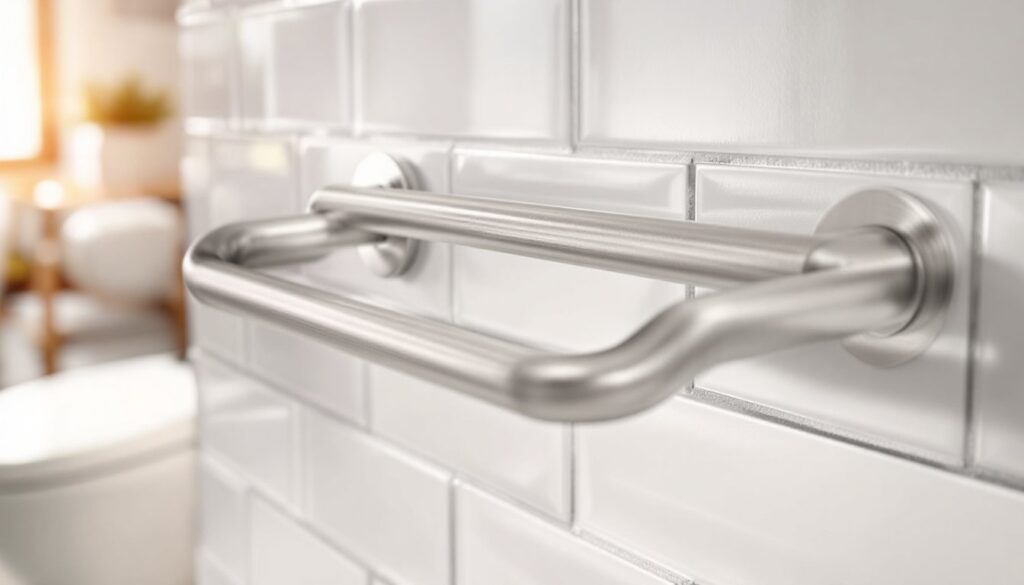
Finish options include polished (chrome-like), brushed (satin), or textured. Polished finishes show water spots and fingerprints more readily. Brushed or textured finishes provide better grip when wet and hide minor wear.
Textured vs. smooth surfaces: Knurled or lightly textured bars improve grip, but avoid aggressive textures that can abrade skin. Smooth bars are easier to clean and sufficient if kept dry or used with a secure grip.
Bar diameter: Most adults find 1¼ to 1½ inches comfortable to grip. Users with arthritis or limited hand strength may prefer 1¼-inch bars, which require less force to grasp securely.
Shape considerations: Straight bars are most common, but L-shaped, T-shaped, and angled bars can suit specific layouts or user needs. Folding or swing-away bars work in tight spaces but must lock securely in the deployed position.
Buy bars that come with mounting hardware rated for the bar’s load capacity. If replacing hardware, use stainless steel or brass screws, never zinc-plated screws, which corrode in moisture.
Common Installation Mistakes to Avoid
Even experienced DIYers make critical errors when installing grab bars. Here’s what to watch for:
Skipping backing or relying on drywall anchors alone: This is the most dangerous mistake. Drywall anchors, even heavy-duty types, aren’t sufficient for the dynamic, sudden loads grab bars experience. Always anchor into studs or solid blocking.
Measuring from the wrong reference point: ADA placement dimensions are specific. Measure from the rear wall to the grab bar’s centerline, not its edge. Measure height from the finished floor to the top of the bar, not the mounting flange.
Over-tightening screws in tile: This cracks the tile and compromises the seal, allowing water infiltration. Tighten screws until the bar is firm, then stop. Use a torque-limiting drill or finish by hand.
Ignoring waterproofing around screw holes: Drilling through tile breaks the waterproof barrier. Apply a bead of silicone caulk under each mounting flange before fastening. After installation, seal around the flange perimeter to prevent water from reaching the wall cavity.
Installing bars at inconsistent heights: If a user relies on grab bars in multiple bathrooms, consistent height builds muscle memory. Stick to 33 to 36 inches AFF throughout the home.
Using the wrong screw length: Screws must penetrate at least 1 to 1½ inches into solid wood. For tile installations, account for tile thickness plus thinset before reaching the stud.
Not testing after installation: Apply firm, downward pressure (using your body weight) to test each bar after installation. If the bar shifts, flexes, or you hear cracking, remove it and reinstall with better anchoring.
Forgetting permits: While most residential grab bar installations don’t require permits, any work involving structural modifications (adding blocking, opening walls) might. Check with your local building department before starting.