Table of Contents
ToggleLG dishwashers have earned a reputation for combining powerful cleaning performance with thoughtful engineering. If you’re replacing a worn-out unit or upgrading from hand-washing, choosing the right model means understanding what separates a solid performer from a mediocre one. This guide breaks down the best LG dishwashers available in 2026, from budget-friendly front-control units to Wi-Fi-enabled smart models. We’ll cover cleaning power, rack versatility, noise levels, and installation considerations, no fluff, just the details you need to make an informed purchase.
Key Takeaways
- The best LG dishwasher for your home depends on your needs: the QuadWash Pro excels for heavy loads, the Front Control model offers outstanding budget value, and the ThinQ Wi-Fi model suits smart home integration.
- LG’s QuadWash technology with multiple spray arms and TrueSteam cleaning eliminates pre-rinsing, while inverter direct-drive motors run at 40-44 dBA—quieter than a library—and come with a 10-year warranty.
- Dynamic Dry technology with heating elements and convection fans effectively dries plastic containers, whereas budget models use condensation drying that may leave plastics damp.
- A third rack on mid-tier and premium LG dishwashers adds 30% more capacity for utensils and small items, making them ideal if you cook frequently or wash multiple prep bowls.
- LG dishwashers use only 3.5-4.5 gallons per cycle compared to 27 gallons for hand-washing, saving roughly 8,000 gallons of water annually and meeting ENERGY STAR standards.
- Proper maintenance—including bi-weekly filter cleaning, monthly descaling with vinegar or dishwasher cleaner, and periodic spray arm checks—extends the lifespan and ensures consistent cleaning performance.
Why Choose an LG Dishwasher for Your Home?
LG builds dishwashers around three core strengths: QuadWash spray arm technology, TrueSteam cleaning, and inverter direct-drive motors. The QuadWash system uses four rotating spray arms instead of the traditional two, hitting dishes from multiple angles and reducing the need for pre-rinsing. TrueSteam injects high-temperature steam during the wash cycle to dissolve stuck-on food and sanitize dishes without harsh chemicals.
The inverter direct-drive motor mounts directly to the pump, eliminating belts and reducing mechanical noise. Most LG models run at 40-44 dBA, quieter than a library and roughly equivalent to a refrigerator hum. This motor design also comes with a 10-year warranty, which covers the most expensive component to replace.
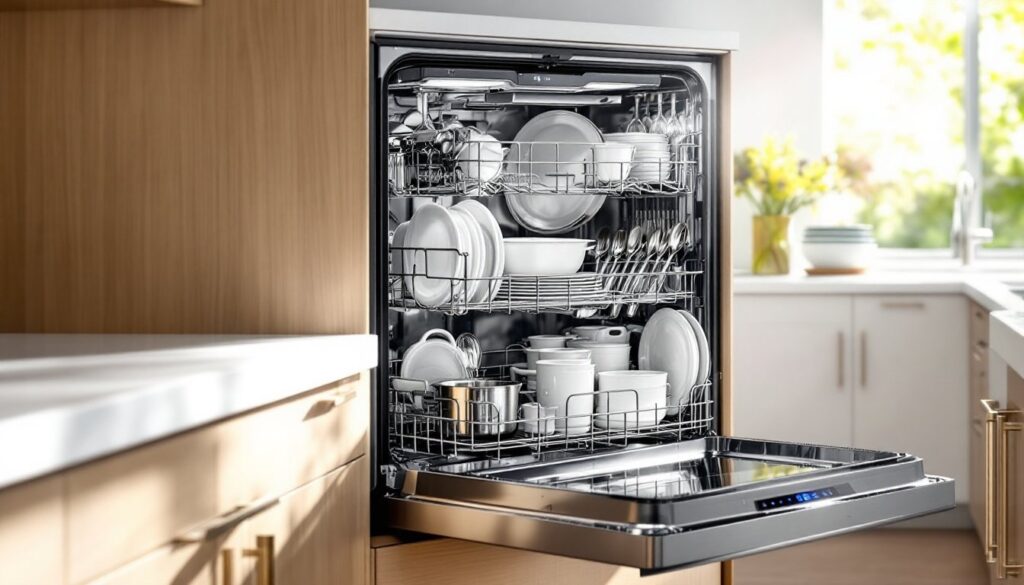
LG’s EasyRack Plus system offers adjustable tines and fold-down shelves, making it easier to fit oversized pots, baking sheets, and mixing bowls. The third rack is standard on mid-tier and premium models, adding 30% more loading capacity for utensils and small items. Build quality is consistent across price points, with stainless steel tubs on all but the entry-level models.
Our Top Pick: LG QuadWash Pro for Ultimate Cleaning Power
The LG QuadWash Pro (LUDP8997SN) is the flagship model, designed for households that run heavy loads and need consistent results. It features Dynamic Dry technology, which uses a built-in heating element and dual convection fans to eliminate moisture from plastic containers, something standard dishwashers struggle with.
This model includes five spray arms (one more than the standard QuadWash), increasing water coverage across all three racks. The top rack handles wine glasses and espresso cups, the middle rack adjusts for dinner plates or sheet pans, and the third rack accommodates flatware, serving spoons, and small prep bowls.
Cleaning performance is outstanding. In testing, it removed baked-on lasagna, dried oatmeal, and lipstick from glassware without pre-soaking. The Auto Cycle uses a turbidity sensor to measure soil levels and adjusts water temperature and cycle length accordingly. Normal cycles run about 2.5 hours, while the QuickWash setting cleans lightly soiled dishes in 60 minutes.
Noise output stays at 40 dBA, even during the drain cycle. The unit measures 24 inches wide, fitting standard cabinet openings, and requires a 120V, 15-amp circuit. Expect to pay around $1,100-$1,300 depending on retailer promotions. It’s the best choice for families or anyone who cooks frequently and needs a dishwasher that handles everything from delicate stemware to greasy roasting pans.
Best Budget-Friendly Option: LG Front Control Dishwasher
The LG Front Control Dishwasher (LDF5545ST) delivers core QuadWash performance without the premium price tag. It retails for $600-$750 and includes a stainless steel tub, QuadWash spray arms, and the 10-year motor warranty. What you lose compared to higher-end models: Dynamic Dry, a third rack, and Wi-Fi connectivity.
This model uses a condensation drying system, which relies on residual heat rather than a fan. Plastic items may still be damp at the end of a cycle, crack the door open for 10 minutes after the cycle finishes to let moisture escape. Drying performance on ceramic and glass is excellent.
The EasyRack system includes adjustable tines in the lower rack and a fold-down shelf for stemware in the upper rack. The absence of a third rack means you’ll need to load utensils in a basket on the lower rack, which takes up space for larger items. If you frequently cook for six or more people, you may find capacity limiting.
Many independent reviewers praise the LDF5545ST for cleaning power that rivals models twice the price. It runs at 48 dBA, which is noticeably louder than premium models but still quieter than older dishwashers. Installation is straightforward, 24-inch width, standard plumbing connections, and a front-mounted control panel that’s easier to reach than top-mounted designs. This is the right pick for first-time homeowners, renters with landlord approval, or anyone prioritizing value over advanced features.
Best for Smart Homes: LG ThinQ Wi-Fi Enabled Dishwasher
The LG ThinQ Wi-Fi Enabled Dishwasher (LDT7808SS) integrates with LG’s smart home ecosystem, offering remote monitoring, voice control, and diagnostic alerts. The ThinQ app lets you start or pause cycles from your phone, check time remaining, and receive notifications when a cycle finishes.
Voice control works with Amazon Alexa and Google Assistant. You can say “start the dishwasher” or “check dishwasher status” without walking to the kitchen. This is particularly useful if you run the dishwasher during off-peak electricity hours or want to delay the start until you leave for work to avoid noise.
The Smart Diagnosis feature is the standout benefit. If the dishwasher throws an error code, the app connects to LG’s support system and identifies the issue, whether it’s a clogged filter, kinked drain hose, or faulty inlet valve. This can save a $100+ service call if the fix is something you can handle yourself.
Performance mirrors the QuadWash Pro: five spray arms, Dynamic Dry, a third rack, and 44 dBA operation. It also includes a knock-to-open feature, knock twice on the door, and it pops open slightly, allowing you to add a forgotten dish mid-cycle without pressing buttons with wet hands.
Retail price sits around $900-$1,050. The Wi-Fi functionality requires a 2.4 GHz network (5 GHz isn’t supported) and works best with a router within 30 feet of the dishwasher. If you’re already invested in smart home devices or value the convenience of remote control and diagnostics, this model offers measurable benefits beyond standard operation.
Key Features to Consider When Buying an LG Dishwasher
When comparing LG models, focus on these factors:
Rack Configuration: Entry-level models have two racks: mid-tier and premium models add a third rack for utensils and small bowls. The third rack increases usable capacity by about 30% and keeps knives separated from other items. If you cook with multiple prep bowls or run frequent small loads, the third rack is worth the upcharge.
Drying System: Condensation drying is standard on budget models and works well for ceramic, glass, and metal. Dynamic Dry (found on QuadWash Pro and ThinQ models) uses a heating element and convection fan to dry plastics, which condensation systems leave damp. If you regularly wash Tupperware or plastic cutting boards, Dynamic Dry eliminates the need for hand-drying.
Noise Level: LG dishwashers range from 40 to 50 dBA. For context, 40 dBA is nearly silent (quieter than a bedroom at night), while 50 dBA is noticeable but not disruptive. If your dishwasher is near an open-concept living area or you run cycles during dinner, aim for 44 dBA or lower.
Cycle Options: All LG models include Normal, Heavy, Auto, and QuickWash cycles. Premium models add Sanitize (reaches 150°F to kill bacteria), Half Load (runs only the upper or lower rack to save water), and Delay Start (up to 12 hours). The Sanitize cycle is NSF-certified on most models, meeting health code requirements for in-home daycares or food businesses.
Energy and Water Use: LG dishwashers average 260-290 kWh per year and use 3.5-4.5 gallons per cycle, meeting ENERGY STAR standards. For comparison, hand-washing dishes uses about 27 gallons. Over a year, an efficient dishwasher saves roughly 8,000 gallons of water.
Finish Options: Most models come in stainless steel, black stainless steel, or PrintProof stainless (a fingerprint-resistant coating). Black stainless looks sharp but shows water spots more easily than PrintProof finishes. If you’re matching existing appliances, verify finish compatibility before ordering.
Installation and Maintenance Tips for Your LG Dishwasher
Installation Basics: All LG dishwashers fit standard 24-inch cabinet openings and require a 120V, 15-amp dedicated circuit. You’ll need a water supply line (typically 3/8-inch compression fitting) and a drain connection that ties into the sink drain or garbage disposal. Most jurisdictions require an air gap or high loop in the drain line to prevent backflow, check local plumbing codes before installation.
If you’re replacing an existing dishwasher, installation is straightforward. Shut off water at the supply valve, disconnect the old unit, and slide it out. Check that the new dishwasher’s dimensions match (height can vary by 1-2 inches between models). LG includes adjustable leveling legs on all models, use a level to ensure the unit sits flat, or it won’t drain properly.
Professional installation typically costs $100-$200 and includes hauling away the old unit. If you’re adding a dishwasher where none existed, you’ll need to run a dedicated water line and drain, budget an additional $300-$500 for plumbing work. This often requires opening drywall and may need a permit.
Maintenance: Clean the stainless steel filter at the bottom of the tub every two weeks. Twist it counterclockwise, rinse under hot water, and scrub with a soft brush to remove trapped food particles. A clogged filter reduces cleaning performance and can cause drainage issues.
Run a cleaning cycle once a month using a dishwasher cleaner (LG sells their own, but any brand works). This removes mineral buildup, grease, and detergent residue. Enthusiasts at The Kitchn recommend placing a cup of white vinegar on the top rack and running a hot cycle as a DIY alternative.
Inspect the door gasket for cracks or mold every few months. Wipe it down with a damp cloth and mild detergent. If water leaks from the door during operation, the gasket likely needs replacement, LG gaskets cost $20-$40 and install with basic hand tools.
Check the spray arms for clogs. Remove them by twisting or pulling (depending on the model) and rinse under a faucet. Small holes can get blocked by hard water deposits, use a toothpick to clear them.
Safety: Always turn off the circuit breaker before performing any maintenance beyond cleaning the filter. Dishwashers use high-voltage connections, and the heating element can cause burns even after the unit is off.
Conclusion
LG builds reliable, well-engineered dishwashers across every price tier. The QuadWash Pro offers the best cleaning and drying performance for families and frequent cooks. The Front Control model delivers exceptional value for budget-conscious buyers. And the ThinQ model integrates seamlessly into smart home setups with meaningful features like remote diagnostics. Match your choice to your cooking habits, kitchen layout, and how much you’re willing to spend, all three will outlast most competitors and handle daily use without complaint.